

Recovery That Meets You Where You Are
Whether you're reaching out for yourself, someone you care about, or a client in need of support, Cenikor is here to help you take the next step. With flexible, evidence-based care and a commitment to serving everyone, we make recovery more accessible—and more sustainable.
Start the ConversationKey Takeaways
- Alcohol withdrawal follows a predictable timeline, with shaking and anxiety in the first 12 hours, seizure risk peaking at 24–48 hours, and delirium tremens possible after 48–72 hours.1
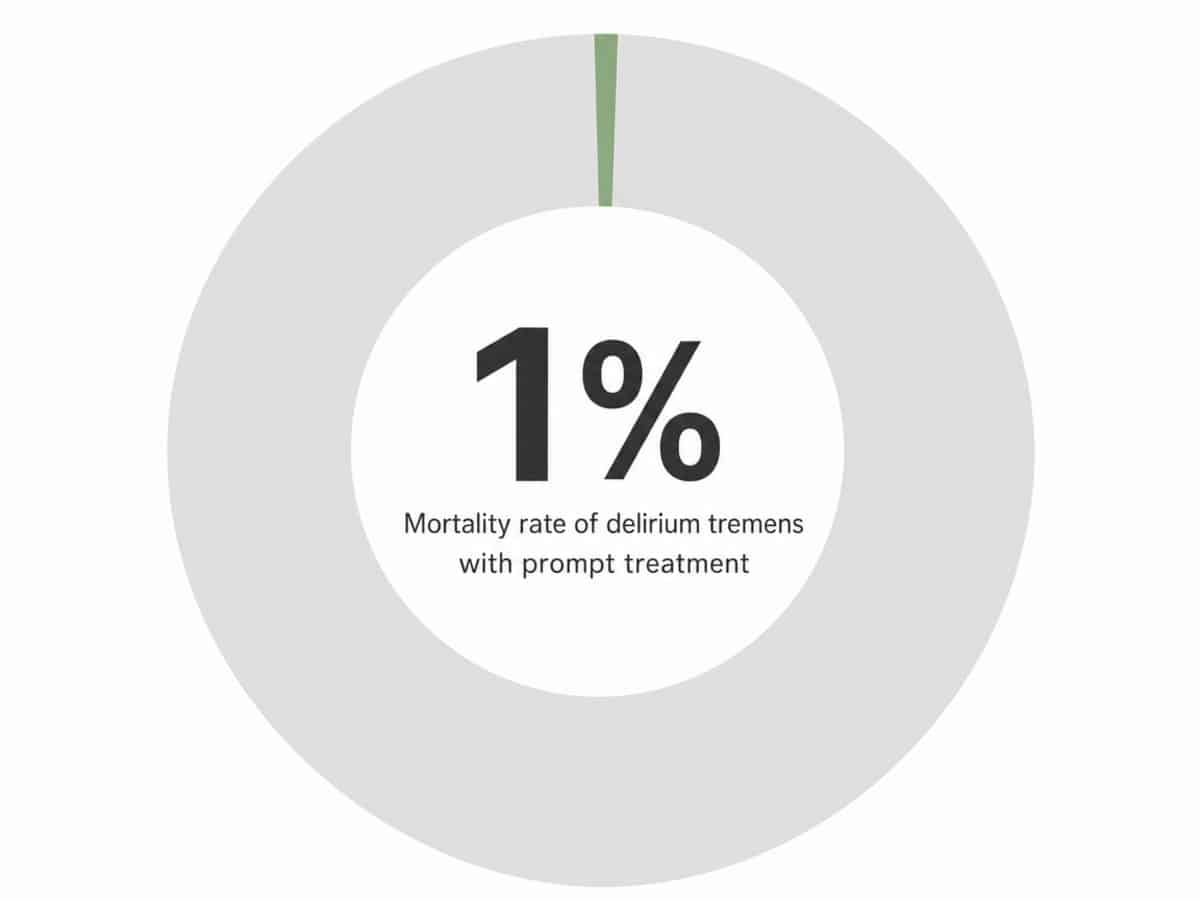
- Quitting cold at home carries real medical risk for heavy drinkers, since untreated DTs kill 3–5% of cases while prompt medical treatment drops mortality to about 1%.1
- A medical detox uses CIWA-Ar scoring to guide benzodiazepine dosing, adds phenobarbital when needed, and includes thiamine to prevent lasting brain injury.1,2
- Detox is the start, not the finish line: residential, PHP, or outpatient care plus FDA-approved medications like naltrexone or acamprosate hold the longer arc of recovery.7,10
What the first 72 hours of quitting alcohol actually feel like
If you’ve been drinking heavily for months or years and your last drink was this morning, your body has already started reacting. About half of people who suddenly stop or sharply cut back on alcohol will go through some form of withdrawal, and the timeline is more predictable than it feels in the moment.1
In the first 6 to 12 hours, you may notice your hands shaking, a tight knot of anxiety, sweat soaking through your shirt, a racing heart, nausea, and trouble keeping food down. Sleep gets choppy. You feel wired and exhausted at the same time.
Between 12 and 24 hours, some people start seeing or hearing things that aren’t there, called alcoholic hallucinosis. Your senses can play tricks on you while you still know, on some level, that they are tricks. That’s frightening, and it’s also a medical signal that withdrawal is escalating.1
The 24 to 48 hour window is when the seizure risk peaks. Generalized tonic-clonic seizures can hit without warning, sometimes in people who’ve never had one before.6
From 48 to 72 hours and beyond, the window for delirium tremens opens. DTs bring severe confusion, fever, blood pressure spikes, and disorientation that can last days.1
Reading this list is hard. Recognizing yourself in it is harder. The point isn’t to scare you. It’s to show you that what you’re feeling has a name, a timeline, and a treatment that works.

Why stopping cold at home can be dangerous
You may be thinking what a lot of people in Corpus Christi think when they finally decide they’re done drinking: I’ll just push through it. A few rough days at home and I’ll be on the other side. That instinct makes sense. It also misses what alcohol does to your nervous system after long, heavy use.
Alcohol is a central nervous system depressant. When you drink heavily for a long stretch, your brain compensates by ramping up excitatory chemistry. Pull the alcohol away suddenly, and that revved-up system has nothing pushing back against it. The result isn’t just discomfort. It’s a medical event your body may not be able to handle alone.1
The risk that matters most is delirium tremens. In untreated alcohol withdrawal, roughly 3 to 5 percent of cases progress to DTs, which bring severe confusion, fever, dangerous swings in heart rate and blood pressure, and at the worst end, death. With prompt medical treatment, the mortality rate of alcohol withdrawal delirium drops to around 1 percent. Those two numbers aren’t abstract. They’re the difference between someone walking out of a detox unit on day five and a family making a phone call no one wants to make.1
Seizures are the other reason home detox is a gamble. Withdrawal seizures can hit between 24 and 48 hours after your last drink, sometimes in people who’ve never had one in their life. They don’t wait for you to feel ready. And if you’ve gone through withdrawal before and white-knuckled it at home, the next round tends to be worse, not easier. Clinicians call that pattern the kindling effect.1,6
There’s also the quieter danger: thiamine deficiency. Heavy drinking depletes B1, and without supplementation, the brain can suffer lasting damage that no amount of willpower reverses. Medical detox addresses this on day one.1
None of this is meant to shame you for what you’ve already tried. Many people quit at home once, twice, ten times before they ask for help. What matters now is that you know the risk you’re carrying, and you know there’s a safer door to walk through.
How a medical alcohol detox in Corpus Christi works
Intake, CIWA-Ar scoring, and the first medication decisions
When you walk through the doors, the first hour is mostly questions and a quick physical. A nurse checks your vital signs, asks when you had your last drink, how much you typically drink in a day, whether you’ve gone through withdrawal before, and whether you’ve ever had a seizure. None of this is meant to corner you. It’s the information your care team needs to keep you safe in the next 12 hours.
The clinical centerpiece of intake is a tool called the CIWA-Ar, the Clinical Institute Withdrawal Assessment for Alcohol, revised. It’s a 10-item scale a nurse scores at the bedside, looking at things like tremor, sweating, anxiety, nausea, headache, agitation, and whether you’re seeing or hearing things that aren’t there. Each item gets a number, and the total tells the team how severe your withdrawal is right now and how often to reassess you.1
That score directly shapes your first medication decision. A low score may mean symptom-triggered dosing, where you only get medication when your CIWA-Ar climbs. A higher score, a history of seizures or DTs, or significant medical issues usually means scheduled dosing on a fixed taper from the start. The ASAM guideline backs this matched approach because it gives enough medication to prevent the dangerous end of withdrawal without sedating you more than you need.2,5
You don’t have to memorize any of this. Your job is to be honest about your drinking history. The team handles the rest.
Benzodiazepines, phenobarbital, thiamine: what’s actually given and why
The medication that does the heavy lifting during alcohol detox is almost always a benzodiazepine. Lorazepam, diazepam, and chlordiazepoxide are the common choices. They work because they target the same brain receptors alcohol does, calming the over-firing nervous system you read about earlier and lowering the risk of seizures and delirium tremens. Among all the options studied, benzodiazepines have the strongest evidence base for treating alcohol withdrawal, which is why nearly every modern protocol leans on them first.6
The choice between specific benzodiazepines depends on you. If your liver is struggling, the team often picks lorazepam because it clears the body more predictably. If you’re younger, healthy, and at risk for a longer withdrawal, a longer-acting agent like diazepam can give a smoother taper.2
For severe withdrawal, especially when benzodiazepines alone aren’t quieting symptoms, phenobarbital is the next tool. It works on a slightly different part of the same calming system and can be added to or substituted for benzodiazepines under careful monitoring.1
The third medication isn’t dramatic, but it matters as much as anything else: thiamine, vitamin B1. Heavy drinking depletes it, and without replacement, you can develop Wernicke’s encephalopathy, a brain injury that’s largely preventable when thiamine is given early. Your care team will also check folate, magnesium, and hydration, because deficiencies in any of those can make withdrawal feel worse than it needs to.1
You’ll likely sleep more than you have in months. That’s the medication doing exactly what it should.
What 24/7 monitoring looks like on the floor
Texas regulation requires residential treatment facilities to provide 24-hour, 7-day-a-week multidisciplinary clinical support, which means a nurse and clinical staff are present around the clock, not just on call. In a detox setting, that translates into a steady rhythm you’ll come to recognize.4
Vitals are checked frequently in the first day or two, sometimes every hour or two if your CIWA-Ar score is elevated, and stretching out as you stabilize. A nurse will repeat the CIWA-AR at scheduled intervals so the medication can be adjusted in real time rather than guessed at. If your score climbs in the middle of the night, somebody is awake to respond.2
Beyond the chart, monitoring is also someone walking past your room, asking how you slept, whether the nausea has eased, whether you’re seeing the room the way it actually is. Hallucinations and confusion can come on quickly, and a trained eye catches them before you might recognize them yourself.6
You’re not on a gurney in a hallway. You’re in a bed, in a room, with people whose entire shift is built around getting you safely to day five. That’s the difference between a hospital ER and a dedicated detox unit, and it’s why walking into one feels less like a crisis and more like the first night of actual rest.
After detox: the Texas continuum of care, in plain English
Detox isn’t the finish line. It’s the first three to seven days of a longer stretch, and one of the most important questions you and your family will answer is: what comes next? Texas regulates four levels of care after detox, and they step down in intensity as you get steadier. Understanding the differences makes the next phone call easier.
Residential treatment is the most structured step after detox. You stay onsite, and the program runs around your day rather than around your old schedule. Texas Administrative Code requires residential facilities to provide 24-hour, 7-day-a-week multidisciplinary clinical support, and intensive residential programs must deliver at least 30 hours of services per week, including counseling and structured activities. Most stays run up to 21 days, which gives you protected time to build habits before life’s noise comes back in.4
Partial hospitalization (PHP) is the bridge. You sleep at home or in recovery housing and come to the program during the day, typically four to six hours, five days a week. It’s a step down from residential intensity but still clinical, with group therapy, individual sessions, and medical follow-up built into the week.7
Outpatient care is the longest phase for most people. Intensive outpatient (IOP) usually runs nine to twelve hours a week across three or four sessions; standard outpatient steps down further to weekly or twice-weekly visits. It’s the level of care that fits around a job, school, or kids at home.7
| Level of care | Setting | Typical weekly clinical hours | Length |
|---|---|---|---|
| Medical detox | 24/7 onsite | Continuous monitoring | 3–7 days |
| Intensive residential | 24/7 onsite | ≥30 hours | Up to 21 days |
| Partial hospitalization | Daytime onsite, sleep offsite | 20–30 hours | 2–4 weeks typical |
| Outpatient (IOP / standard) | Offsite, scheduled visits | 1–12 hours | Weeks to months |
You don’t have to climb every rung. Where you start depends on your withdrawal severity, your home situation, and what your care team sees during detox. Cenikor’s Corpus Christi facility opens that door locally, and the rest of the Texas footprint, from San Antonio to Tyler to the DFW Metroplex, means a higher level of care is reachable if you ever need it. A lifetime of support for a lifetime of recovery starts with picking the right next step, not all of them at once.
Medications that help you stay stopped
Once you’re through the first week, the medication conversation shifts. The drugs that got you safely through withdrawal aren’t the ones designed to help you stay away from alcohol long-term. That’s a separate toolbox, and it’s one of the most under-used parts of recovery.
The FDA has approved three medications specifically for alcohol use disorder: naltrexone, acamprosate, and disulfiram. Current NIH guidance recommends oral acamprosate or oral or extended-release injectable naltrexone as the preferred first-line options for most people.7
Naltrexone blocks the opioid receptors that make drinking feel rewarding. If you do drink on it, the buzz is muted. It comes as a daily pill or a once-a-month injection, which a lot of people find easier than remembering a tablet every morning.7
Acamprosate works on a different problem. After heavy long-term drinking, your brain stays in a hyperexcited state for months, which fuels cravings, sleep trouble, and that low hum of anxiety. Acamprosate dampens glutamate activity and quiets that hyperexcitability, which is why it tends to help people who’ve already stopped and want to stay stopped.10
Disulfiram takes a different angle, causing an unpleasant reaction if you drink while taking it. It works best for people with strong daily structure and someone helping them stay accountable.7
Medication isn’t a moral test you’re failing by needing one. It’s a tool, paired with counseling, that gives recovery a fighting chance.9
Paying for treatment: Medicaid, commercial insurance, and veteran coverage
Money is the question almost everyone asks second, right after is it safe? It’s a fair question, and the answer in Texas is more workable than most people expect when they pick up the phone.
Medicaid covers medically necessary substance use treatment, including detox and residential care, for adults who qualify. If you’re already enrolled, your card is the starting point. If you’re not sure whether you qualify, the admissions team can usually screen you in the same call that screens you clinically. You don’t need to have it figured out before you dial.
Commercial insurance through an employer or the marketplace generally covers detox and the levels of care that follow it, because federal parity law treats addiction treatment as essential health care. Cenikor accepts more than 30 major insurance carriers, and a benefits check on your plan, including deductible, copay, and what’s covered at each level of care, is something the team can run for you in minutes. Bring your card or a picture of it when you call.
Veterans have additional doors open. VA benefits, TRICARE, and community care referrals all route through admissions, and Cenikor has dedicated programming for veterans and active duty across its Texas footprint.
If coverage is the wall in front of you, say so on the first call. Nonprofit status gives Cenikor flexibility on payment that for-profit centers often don’t have. The cost conversation belongs in the same room as the clinical one, not as a reason to wait another week.8
Same-day admission: how to actually get a bed today
Most people who finally pick up the phone are afraid the answer will be “we have an opening in two weeks.” That’s not how detox admission usually works in Corpus Christi.
The first call takes about 15 to 20 minutes. An admissions counselor will ask when you had your last drink, how much you typically drink, your medical history, any past withdrawal episodes, and what insurance you carry. While you’re still on the line, they can run a benefits check, screen you for the right level of care, and tell you whether a bed is open today. Cenikor’s Corpus Christi line is staffed 24/7, which means a 2 a.m. call from a kitchen floor gets the same response as a Tuesday morning one.
If a bed is available, intake can often happen the same day. Bring your ID, your insurance card if you have one, a short list of any medications you take, and clothes for a few days. You don’t need to bring paperwork you don’t have. You don’t need to be sober to walk in, and you don’t need a doctor’s referral.
If Corpus Christi is full, the admissions team can route you to another Cenikor facility in Texas or, if you’d rather start somewhere else, to SAMHSA’s 24/7 helpline at 1-800-662-HELP for a referral. You’re not just entering a program, you’re entering a team that cares about getting you to the right bed tonight.8
If you’re the spouse, parent, or adult child reading this
You’ve probably read this far hoping to find the sentence that will work on them. The one you can text, or read out loud at the kitchen table, that will make them say yes. There isn’t a single sentence. There are a few things that help.
Stop trying to win the argument about whether they have a problem. That fight burns the trust you’ll need later. Talk instead about what you’ve seen, in plain language and without a verdict: the shaking in the morning, the missed pickup, the night you couldn’t wake them. Specifics land in a way that labels don’t.
Get the logistics ready before they’re ready. Know which insurance card is in the drawer. Know that Cenikor’s Corpus Christi line answers 24/7 and that admissions can run a benefits check while you’re still on the phone. Know that SAMHSA’s helpline at 1-800-662-HELP is free and confidential if your loved one wants to talk to someone who isn’t connected to a specific facility. When the window opens, sometimes it’s only an hour wide, and the family who’s already done the homework is the one that gets a bed that night.8
Know what you’re up against medically, so you don’t underestimate a quiet morning. Withdrawal can escalate fast, and seizures don’t announce themselves. If your person is shaking, sweating, confused, or hallucinating, that’s not a moment to wait it out at home. And take care of yourself. Addiction is a chronic, treatable condition, not a character flaw, and recovery is a long arc for the whole family, not just the person drinking. You don’t have to carry this alone, and you don’t have to have the perfect words tonight.1,9
Recovery as a long arc, not a finish line
Day five out of detox feels like a victory, and it is one. It also isn’t the end of the story. The brain that adapted to alcohol over months or years doesn’t reset in a week. Cravings can show up months later, triggered by a song, a holiday, a Tuesday with no reason at all. Knowing that ahead of time is part of staying ready.
Addiction is a chronic, treatable condition, which means recovery looks more like managing diabetes than recovering from a broken bone. People relapse, adjust the plan, and keep going. That isn’t failure. It’s the actual shape of the work.9
What helps the arc hold is keeping support in your week even when you feel fine. Outpatient counseling, a medication like acamprosate or naltrexone if your team recommends one, recovery housing if home isn’t steady yet, and a community that knows your name. Cenikor’s Texas footprint is built around exactly that handoff, from Corpus Christi through residential, outpatient, and recovery housing across the state.
You don’t have to be cured by Friday. You have to be here, and willing to take the next right step. That’s enough to start. Your path to healing begins with a single call—reach out today to discover how our experienced team can help you reclaim your life and build the future you deserve.
Frequently Asked Questions
How long does alcohol detox take in Corpus Christi?
Most medical alcohol detox stays run three to seven days, depending on how heavily you drank, how long you drank, and whether you’ve gone through withdrawal before. Your CIWA-Ar scores guide when the medication taper ends and when you’re medically clear to step into the next level of care. Some people stabilize faster, some need a day or two longer.2
Is medical detox safer than quitting alcohol at home?
Yes. Heavy drinkers risk seizures, hallucinations, and delirium tremens when alcohol is pulled away suddenly, and these can escalate fast at home. Medical detox uses benzodiazepines, thiamine, and round-the-clock monitoring to keep you ahead of those risks rather than reacting to them. Quitting at home can work for light drinkers, but if you’re shaking by mid-morning, supervised care is the safer door.1,6
Does Medicaid or commercial insurance cover alcohol detox in Texas?
Generally, yes. Texas Medicaid covers medically necessary detox and the levels of care that follow it for adults who qualify. Commercial insurance through an employer or the marketplace also covers detox, residential, PHP, and outpatient treatment under federal parity rules. Cenikor accepts more than 30 carriers and can run a benefits check while you’re on the first call, so you don’t have to figure out coverage alone.
Can I get into a detox bed the same day I call?
Often, yes. Cenikor’s Corpus Christi line is staffed 24/7, and the admissions screening, benefits check, and bed availability check happen on the same call. If a bed is open, intake can usually happen that day. If Corpus Christi is full, the team can route you to another Texas facility or to SAMHSA’s helpline at 1-800-662-HELP for a referral. You don’t need a doctor’s note.8
What happens after detox ends?
Detox stabilizes your body, but the work that keeps you stopped happens after. Most people step into residential treatment, partial hospitalization, or outpatient counseling, depending on what your care team sees during detox. You may also start an FDA-approved medication like acamprosate or naltrexone to reduce cravings. Recovery housing and ongoing counseling fill in the longer arc, so day five doesn’t become a cliff.7,10
How can I help a spouse or family member who won’t go to detox?
Skip the argument about whether they have a problem. Talk about specific things you’ve seen, calmly, without a label attached. Have logistics ready: insurance card, a number to call, a packed bag. The window where someone says yes can be short. If they want to talk to someone outside the family first, SAMHSA’s free, confidential helpline at 1-800-662-HELP is staffed 24/7 in English and Spanish.8
References
- Alcohol Withdrawal Syndrome – StatPearls – NCBI Bookshelf – NIH. https://www.ncbi.nlm.nih.gov/books/NBK441882/
- The ASAM Clinical Practice Guideline on Alcohol Withdrawal Management Pocket Guide. https://www.samhsa.gov/resource/ebp/asam-clinical-practice-guideline-alcohol-withdrawal-management-pocket-guide
- Alcohol Use Disorder – Causes, Symptoms, Treatment & Help. https://www.samhsa.gov/substance-use/learn/alcohol
- 26 Tex. Admin. Code § 564.903 | State Regulations | US Law. https://www.law.cornell.edu/regulations/texas/26-Tex-Admin-Code-SS-564-903
- The ASAM Clinical Practice Guideline on Alcohol Withdrawal Management. https://pubmed.ncbi.nlm.nih.gov/32511109/
- Clinical management of alcohol withdrawal: A systematic review. https://pmc.ncbi.nlm.nih.gov/articles/PMC4085800/
- Treatment of Alcohol Use Disorder – NCBI Bookshelf – NIH. https://www.ncbi.nlm.nih.gov/books/NBK561234/
- National Helpline for Mental Health, Drug, Alcohol Issues – SAMHSA. https://www.samhsa.gov/find-help/helplines/national-helpline
- Treatment | National Institute on Drug Abuse – NIDA. https://nida.nih.gov/research-topics/treatment
- Medications Development Program. https://www.niaaa.nih.gov/medications-development-program
- [PDF] Principles of Drug Addiction: A Research-Based Guide (Third Edition). https://nida.nih.gov/sites/default/files/podat-3rdEd-508.pdf
Recovery Built for Real Life
Recovery doesn't have to feel out of reach. At Cenikor, we provide practical, affordable care designed for real life—whether you're navigating substance use, supporting a loved one, or helping someone find the right level of care.
Explore Your Options Written by Cenikor’s Clinical & Compliance Team