

Recovery That Meets You Where You Are
Whether you're reaching out for yourself, someone you care about, or a client in need of support, Cenikor is here to help you take the next step. With flexible, evidence-based care and a commitment to serving everyone, we make recovery more accessible—and more sustainable.
Start the ConversationKey Takeaways
- Skill Progression Roadmap: Master the identification of kratom dependence versus casual use (Estimated time: 1 week of clinical observation).
- Essential Tools: Utilize patient intake journals and symptom tracking logs to monitor escalating dosage patterns effectively.
- Competency Checklist: You can successfully differentiate kratom withdrawal from other substance use concerns and integrate this knowledge into your treatment planning.
- General Wellness Focus: Understand how kratom impacts overall physical stability and recovery outcomes without relying on unregulated products.
Why Kratom’s ‘Natural’ Label Misleads Users: Is Kratom Safe?
What Kratom Actually Is and How It Works
If you or someone you love is using kratom, you may be wondering what it really is—and whether it’s safe. There’s a lot of mixed information out there, and it can be hard to know what to believe.
Understanding how kratom works in the body can help you make more informed decisions and take the next step toward support if you need it.
Kratom isn’t just another herbal supplement. It comes from the leaves of a tropical tree called Mitragyna speciosa, native to Southeast Asia. For generations, people there have used it in small amounts for energy or relief from discomfort. But the way it’s used today—and the way it affects the body—can be very different.
Kratom contains compounds that act on the same parts of the brain as opioids like morphine or oxycodone. At lower amounts, it may feel stimulating. At higher amounts, it can slow the body down and relieve pain. Because of this, it can lead to dependence and withdrawal—even though it’s often described as “natural” or safer than other substances.
If you’re unsure about what kratom use means for you or someone you care about, you’re not alone. Getting clear, honest information is an important first step—and help is available when you’re ready.
The Legal Gray Area Creating Risk
If you walk into a gas station or corner smoke shop in many U.S. states, you’ll see kratom lined up on the shelves—no prescription, no age check, no warning labels. This easy access is the direct result of kratom’s legal gray area. Unlike prescription drugs or even many over-the-counter supplements, kratom isn’t regulated by the FDA. That means there’s no federal oversight for quality, safety, or marketing claims. While some states and cities have banned or restricted kratom, most allow unrestricted sales, and enforcement is inconsistent at best.6
This patchwork approach creates real risks for users. Without national standards, kratom products can contain unpredictable amounts of active ingredients—or even contaminants like heavy metals and bacteria. In 2023, the FDA warned about batches of kratom tainted with salmonella, highlighting the dangers of products that aren’t subject to safety checks.1
The lack of regulation also fuels the myth that kratom is safe just because it’s natural and widely available. But the numbers tell a different story: calls to poison control centers about kratom have surged over the last decade, jumping from just 26 in 2011 to more than 1,800 in 2021. That spike reflects real-world consequences of an unregulated market.2
Understanding Kratom Dependence vs Addiction
How Dependence Develops With Regular Use
Kratom use can change over time—and it’s not always easy to notice when it starts to become something your body depends on. What may begin as occasional use can slowly turn into a routine that feels harder to go without. Understanding that shift can help you recognize when it might be time to take a closer look.
Dependence is the body’s way of adapting to something it’s getting regularly. With kratom, certain compounds affect the same areas of the brain as opioids. At first, it might be used to boost energy or take the edge off. But over time, even using it once or twice a day can lead your body to expect it. You might start to feel like you need kratom just to feel “normal” or to avoid feeling unwell.
This doesn’t always mean addiction—but it is an important warning sign. Some people notice they need more over time to feel the same effects, or that missing a dose leads to discomfort, restlessness, or cravings. These changes can happen gradually, then become more noticeable as use becomes part of a daily routine.
If you’re wondering whether your symptoms—or someone else’s—may be increasing, paying attention to patterns can help. Try keeping track for a week: note when kratom is taken, how much, and how you feel before and after. Small insights like these can make a big difference in understanding what’s really going on—and whether it might be time to reach out for support.
Withdrawal Symptoms You Need to Recognize
If you’re thinking about cutting back or stopping kratom—or supporting someone who is—it helps to know what to expect. Withdrawal symptoms are real, and they can make change feel more difficult than expected.
Some people notice they don’t feel quite right after missing a dose. That experience is valid. Withdrawal can begin within a day or two after stopping and may last several days or, in some cases, a few weeks depending on how often and how much kratom has been taken in the past.
Common symptoms can show up in different ways, including:
- Physical discomfort: muscle aches, joint pain, low energy
- Body responses: sweating, runny nose, nausea
- Emotional changes: irritability, restlessness, strong cravings
- Sleep issues: difficulty falling or staying asleep
One way to think about it: stopping kratom can feel similar to giving up something your body has gotten used to—like caffeine—but often more intense and longer-lasting because of how it affects the brain.
If this feels overwhelming, you’re not alone. Withdrawal can be challenging, but it’s also temporary—and support can make a real difference. Having the right help in place can make the process safer, more manageable, and a lot less isolating.
Rising Kratom Concerns in Texas and New Mexico: Is Kratom Safe?
In places like Texas and New Mexico, kratom use has been increasing in recent years. Knowing that can help put your or your loved one’s experience into context. If it feels like more people around you are talking about it, you’re not imagining it. And if you’re starting to have concerns, that awareness matters.
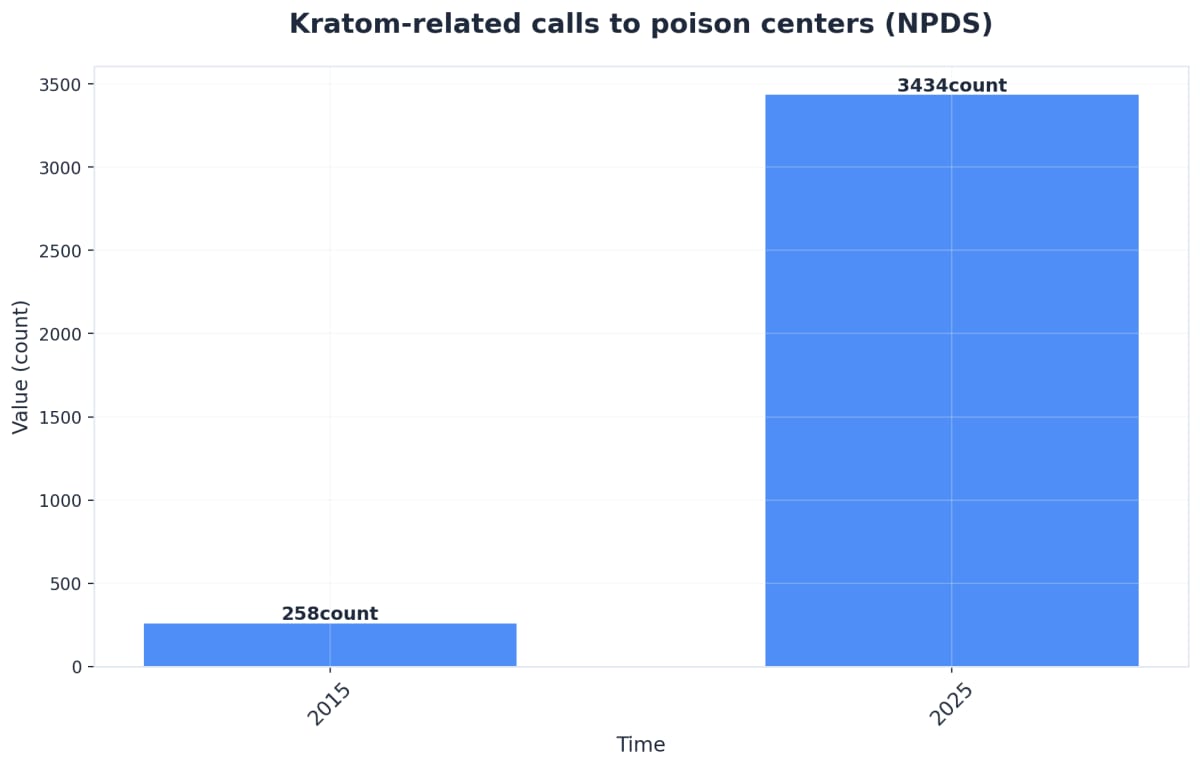
Kratom is presenting new clinical challenges across Texas and New Mexico that individuals need to understand. While this botanical substance remains legal and widely accessible throughout both states, the clinical picture emerging from emergency departments and treatment facilities tells a more complex story than many patients initially realize.
Poison control centers in both states have documented a noticeable uptick in kratom-related calls over the past few years. Emergency departments are reporting increased visits tied to this substance, with patients presenting symptoms ranging from tachycardia and hypertension to confusion, agitation, and seizures. These aren’t isolated incidents—they represent a pattern that’s reshaping intake assessments and treatment planning across the region.
What makes kratom particularly challenging from a clinical standpoint is its legal status and widespread availability. Patients can purchase it at gas stations, smoke shops, and online retailers without any prescription or medical oversight. This accessibility creates a false sense of security that complicates treatment conversations. Many patients arrive believing that legal availability equates to safety, especially when they’ve been using it daily or in escalating amounts.
The marketing landscape around kratom further complicates patient education. It’s promoted as a “natural” remedy for pain, energy, and even opioid withdrawal management. While some patients do use it to self-manage withdrawal symptoms from other substances, this doesn’t eliminate dependence risk. Kratom itself can lead to physical dependence, and patients discontinuing after regular use often experience withdrawal symptoms remarkably similar to opioid withdrawal—fatigue, irritability, muscle aches, and intense cravings that can derail early recovery efforts.
Treatment providers across the region are reporting that more patients are presenting with kratom dependence alongside other substance use concerns. It’s not always the primary presenting issue, but it’s increasingly part of the clinical picture during comprehensive assessments. The lack of regulatory oversight means there’s no standard dosage, no quality control, and no consistency across batches—factors that complicate both risk assessment and treatment planning.
When Kratom Use Becomes a Problem
Daily Reliance and Escalating Dosage Patterns
If you’re starting to wonder whether kratom use has become harder to manage and that you or a loved one are relying on it, it may be time to look at what support could look like for you. Taking that step doesn’t mean something is “too far gone”—it means you’re paying attention to what you need.
Treatment isn’t one-size-fits-all. For some, it may begin with a simple conversation—talking through what use has looked like and how it’s affecting daily life. From there, support can be tailored to meet you where you are, whether that means help with cutting back, managing withdrawal symptoms, or building new routines that don’t rely on substances.
As kratom use becomes more frequent, many people find they need more structure and support than they expected. That can include medical care during withdrawal, counseling to understand patterns of use, and ongoing support to stay on track. The goal isn’t just to stop using—it’s to help you feel stable, supported, and able to move forward.
If you or someone you love is thinking about getting help, you don’t have to have all the answers first. Reaching out is a strong first step, and it can open the door to care that’s designed around your needs—not judgment.
Evidence-Based Support for Kratom Dependence
These regional trends in kratom use require updated clinical approaches. As dependence patterns become more prevalent, treatment professionals need evidence-based protocols that address kratom’s unique withdrawal profile and the motivations driving sustained use.
Outpatient programming provides the flexibility many kratom-dependent individual need while maintaining work and family commitments. Standard protocols should address the characteristic withdrawal syndrome—fatigue, irritability, physical dysphoria, and persistent cravings—through structured behavioral interventions. Individual and group modalities help individual identify underlying drivers (chronic pain self-medication, general wellness management, previous opioid use) while building sustainable coping mechanisms and peer accountability.
Residential treatment becomes clinically indicated when dependence severity, co-occurring substance use, or lack of environmental supports compromise outpatient success. These programs offer medical monitoring during acute withdrawal, structured therapeutic environments, and intensive intervention addressing the pain, stress, or functional impairments that initiated kratom use. Medication-assisted treatment warrants consideration when kratom dependence developed alongside opioid use patterns or as an opioid substitution strategy, providing pharmacological stabilization that supports engagement in behavioral treatment.
Treatment matching should be driven by dependence severity, withdrawal history, functional impairment, and environmental factors—not individual minimization or external pressures. When individual present with questions about their kratom use, that emerging awareness represents a clinical opportunity worth exploring through comprehensive assessment, even before they meet formal dependence criteria.
Frequently Asked Questions
Can kratom show up on standard drug tests?
Most standard drug tests—like those used for employment or probation—do not screen for kratom or its main alkaloids, mitragynine and 7-hydroxymitragynine. That means regular urine panels (such as SAMHSA-5 or 10-panel tests) typically won’t detect kratom use. However, specialized laboratory tests can identify kratom if specifically ordered. Some workplaces, treatment centers, or legal agencies may request expanded panels that include kratom, especially if there’s suspicion of use. It’s also important to remember that kratom’s unregulated status doesn’t make it risk-free; its presence may be checked in certain clinical or forensic situations.3
How does kratom interact with prescription medications?
Kratom can interact unpredictably with prescription medications, raising real safety concerns for anyone taking multiple substances. Because kratom’s active compounds act on opioid receptors and also influence other pathways, combining it with sedatives, antidepressants, opioids, or even some blood pressure medications may increase the risk for side effects like respiratory depression, drowsiness, or dangerous changes in blood pressure. There’s also evidence that kratom can interfere with how the liver processes certain drugs, potentially leading to higher or lower levels of those medications in your body 1. If you’re wondering, is kratom safe to use alongside prescriptions, the answer is: only with careful medical oversight and full disclosure to your healthcare provider.3,4
Is kratom safer than prescription opioids for pain management?
Kratom is often promoted as a safer, natural alternative to prescription opioids for pain, but the reality is more complex. Both kratom and opioids act on the brain’s opioid receptors, which means they share similar risks for dependence, withdrawal, and overdose—even if kratom’s effects are usually milder at comparable doses. Unlike prescription opioids, kratom is unregulated, so potency and purity vary dramatically between products, increasing the risk of unexpected side effects or contamination. While some people report fewer severe respiratory depressant effects with kratom, clinical evidence shows that regular use can still lead to addiction and withdrawal symptoms. If you’re asking, “is kratom safe” compared to opioids, the answer is: both carry real risks, especially without medical oversight.3,4
What’s the difference between red, white, and green vein kratom strains?
Red, white, and green vein kratom strains come from the same plant but are named for the color of the leaf veins and stems—each believed to have unique effects. Red vein is typically reported as the most sedating, often used for relaxation or discomfort. White vein is promoted as more stimulating, sometimes associated with increased energy or focus. Green vein is said to offer a middle ground, with both mild stimulating and relaxing properties. However, research shows that actual effects depend more on dose, individual biology, and product variability than on strain color alone. With no industry standards, labeling can be inconsistent, and the question “is kratom safe” applies to all strains equally.3
How long does kratom stay in your system?
How long kratom stays in your system depends on several factors, like dose, frequency of use, metabolism, and even the specific product. The main compound, mitragynine, is usually detectable in blood for about 24 hours after a single moderate dose, but can be found in urine for up to five to seven days—especially with regular or high-dose use 3. For people who use kratom frequently, traces might linger even longer. Because kratom products are unregulated and vary in potency, these time frames are only estimates. If you’re wondering, is kratom safe to use before a drug test or medical procedure, always consult a healthcare professional.
Can you overdose on kratom?
Yes, it is possible to overdose on kratom, though the risk is often underestimated due to its “natural” reputation. Overdose symptoms can include severe drowsiness, confusion, rapid or irregular heartbeat, high blood pressure, seizures, and—at very high doses—loss of consciousness. There have been documented cases where kratom alone, or combined with other substances, led to medical emergencies and even death. Because product strength and purity vary widely, users may unintentionally take much more than intended, raising overdose risk 3. If you or someone you know experiences alarming symptoms after using kratom, seek medical help immediately.2,3
Conclusion
Kratom can lead to real dependence and withdrawal, but you don’t have to manage that on your own. Support is available, and getting help can look different for everyone.
At Cenikor, care is built around your needs—from safe, medically supported detox to residential treatment, outpatient programs, and ongoing recovery support. Wherever you’re starting, there’s a path forward.
The first step is simply reaching out. You don’t need to have everything figured out, and you won’t be judged. You’ll be met with understanding, clear information, and a team focused on helping you feel stable, supported, and ready for what’s next.
Recovery is possible—and it can start today. Reach out to Cenikor to talk with someone who understands and find the care that’s right for you.
References
- FDA and Kratom. https://www.fda.gov/news-events/public-health-focus/fda-and-kratom
- American Association of Poison Control Centers (AAPCC). https://www.poisoncontrol.org/
- Kratom Use and Health Outcomes: A Systematic Review (NIH/NCBI). https://www.ncbi.nlm.nih.gov/pubmed/33152949
- Kratom Use and Dependence: A Review of the Literature (Journal of Addiction Medicine). https://www.ncbi.nlm.nih.gov/pmc/articles/PMC7098505/
- Substance Abuse and Mental Health Services Administration (SAMHSA). https://www.samhsa.gov/
- Drug Enforcement Administration (DEA) – Kratom Information. https://www.dea.gov/
- Kratom Withdrawal: A Systematic Review and Meta-Analysis (American Journal of Addiction). https://www.ncbi.nlm.nih.gov/pmc/articles/PMC7118442/
- CDC – Kratom: Health Effects. https://www.cdc.gov/ncbddd/featured-topics/health-effects-kratom.html
- Kratom Use Among Veterans: Health Outcomes and Service Utilization (Military Medicine Journal). https://www.ncbi.nlm.nih.gov/pmc/articles/PMC6596373/
- Kratom Use in Adolescents and Young Adults: Prevalence and Risk Factors (Substance Use & Misuse). https://www.ncbi.nlm.nih.gov/pubmed/30891070
Recovery Built for Real Life
Recovery doesn't have to feel out of reach. At Cenikor, we provide practical, affordable care designed for real life—whether you're navigating substance use, supporting a loved one, or helping someone find the right level of care.
Explore Your Options Written by Cenikor’s Clinical & Compliance Team