

Recovery That Meets You Where You Are
Whether you're reaching out for yourself, someone you care about, or a client in need of support, Cenikor is here to help you take the next step. With flexible, evidence-based care and a commitment to serving everyone, we make recovery more accessible—and more sustainable.
Start the ConversationKey Takeaways
- The 60 days between discharge and the first Houston school bell carry the highest relapse risk, with more than half of teens relapsing within 90 days of an acute treatment episode.8
- Houston teens most often use alcohol, marijuana, and misused prescription drugs, so aftercare planning should name the specific substance, settings, and friend group your teen is returning to.24
- Compare programs on continuing care specifics: a named aftercare contact before discharge, a written weekly schedule, family sessions past discharge, and a same-week response if your teen slips.
- Medicaid, CHIP, and the YES waiver cover adolescent outpatient counseling, detox, and residential care in Harris County, with HHSC as payor of last resort for gaps.12,19
The 60 days between discharge and the first report card
If you’re reading this in August with a knot in your stomach, you already know the calendar is working against you. Your teen may be finishing a summer treatment program, or you may still be searching for one, and either way there’s a date circled on the fridge: the first day of school. The window between walking out of a treatment program and sitting through a first-period bell is where a lot of families lose the ground they just gained. Naming that out loud is the first honest step.
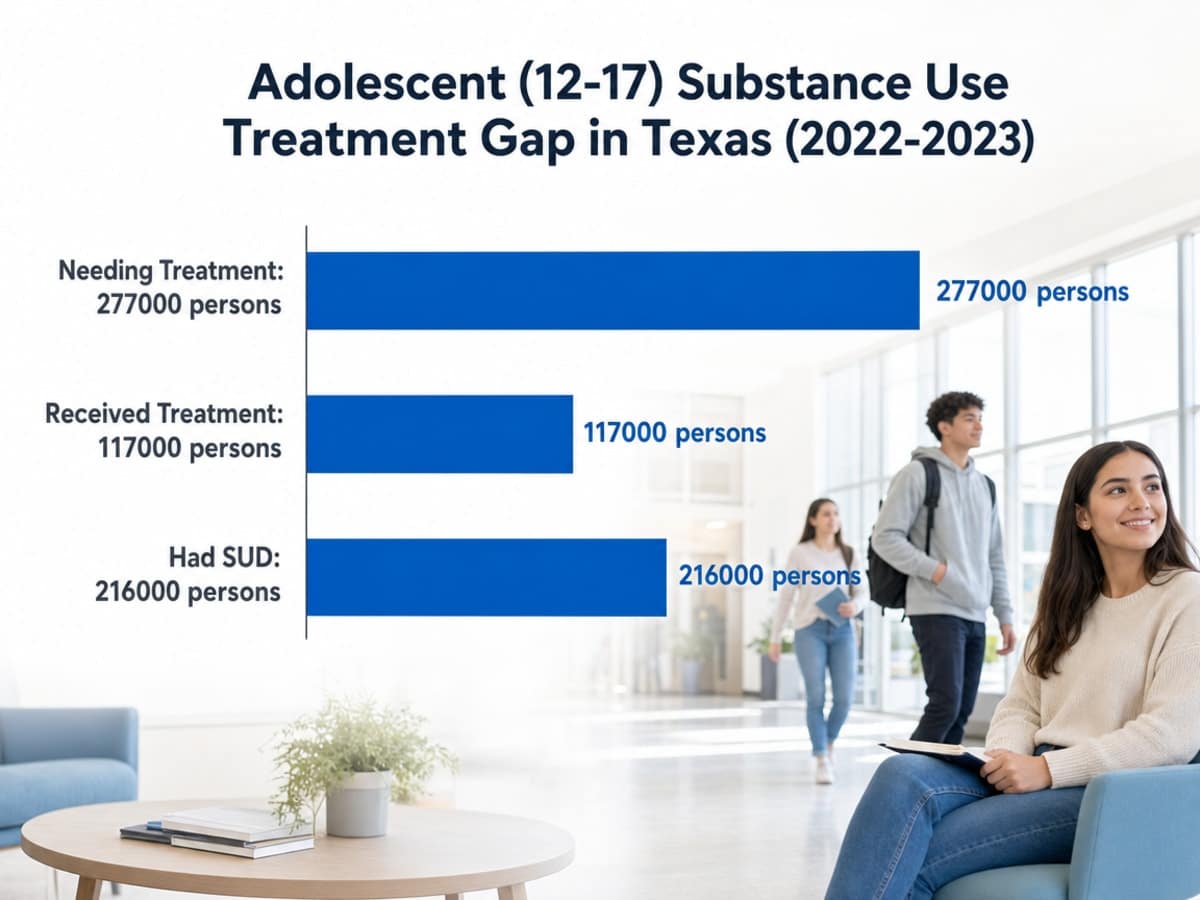
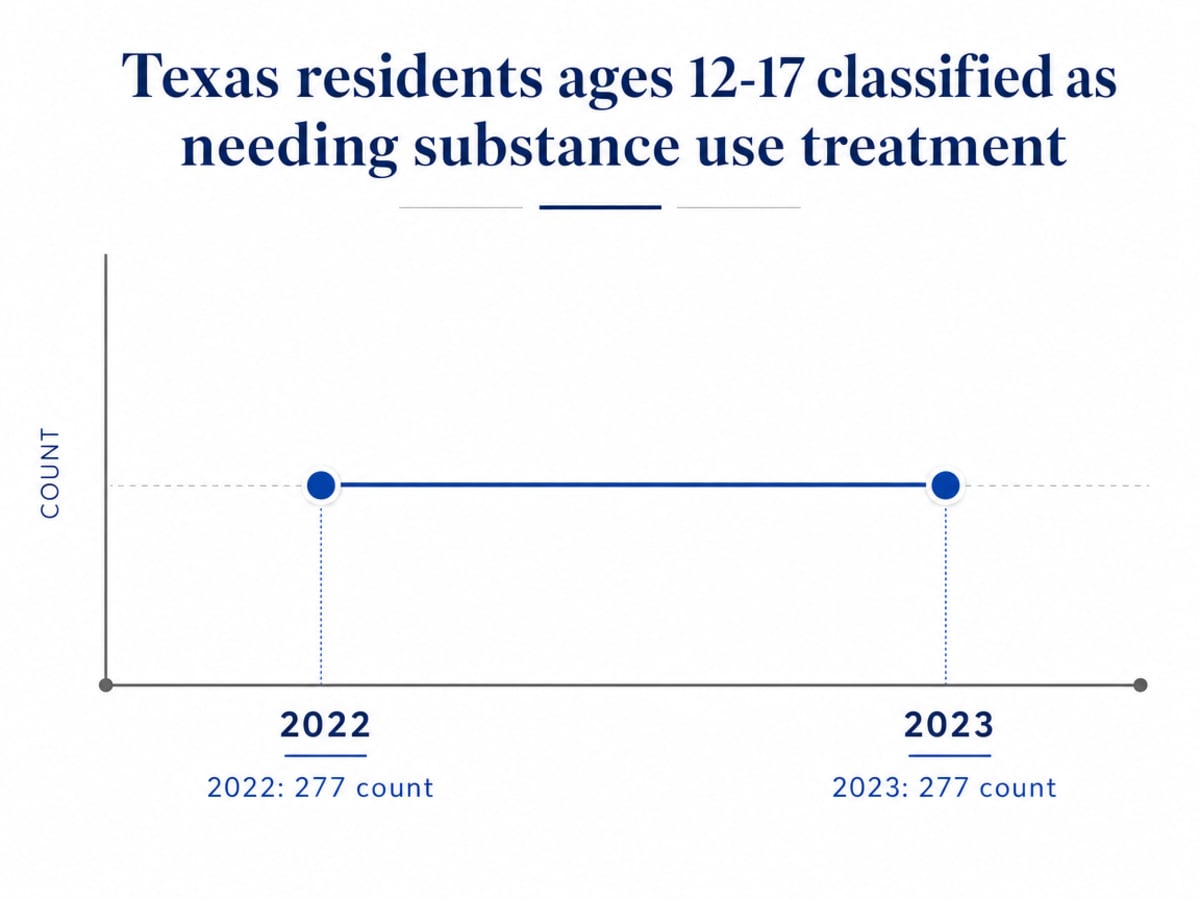
You are not alone in this search. In Texas, roughly 277,000 adolescents ages 12–17 were classified as needing substance use treatment in the past year, while only about 117,000 actually received it, according to SAMHSA’s 2022–2023 state estimates. That gap of 160,000 kids is not an abstraction. It’s the friend group at your teen’s high school. It’s the reason parents in Houston searching for teen substance abuse treatment Houston at 11 p.m. keep hitting the same handful of programs and wondering which one will still matter in October.1
The next 60 days matter because they connect two very different environments: a structured treatment setting where meals, sleep, and peers are chosen for your teen, and a school hallway where none of that is true. A discharge date isn’t a finish line. It’s the start of a new phase where the plan has to travel with your kid — into third period, into the cafeteria, into the group chat.
That’s the frame for the rest of this guide. Not a levels-of-care menu. A back-to-school bridge, built for the parent who needs one right now.
Why August is the highest-risk window for a Houston teen
August is scary. You’re not imagining that. The calendar itself is a trigger, because school reintroduces every variable a treatment program worked hard to remove: unstructured passing periods, the same friend who first offered a vape in the parking lot, a coach who doesn’t know what your kid just went through, and a phone that lights up all day with reminders of the old routine.
Here’s the number that should shape your planning, not scare you into paralysis. In a review of continuing care evidence for adolescents leaving substance use treatment, relapse rates during the year after treatment often exceeded 60%, and more than half of teens relapsed within 90 days of an acute treatment episode. That review looked specifically at kids coming out of formal treatment — inpatient, residential, or intensive outpatient — and tracked what happened when they went back to their regular environments. In other words, the highest-risk window isn’t the drive home from the facility. It’s the first three months after, which for a Houston family finishing summer treatment lands squarely on Labor Day, the first progress report, and homecoming week.8
So if you’re staring at the August calendar wondering why your stomach won’t unclench, trust that instinct. The next section covers what Houston teens are actually using — because the plan you build depends on what you’re actually up against.
What Houston teens are actually using, and what it means for your plan
Before you can build a return-to-school plan, you need an honest picture of what your teen is likely bringing home from that plan. In Houston, the primary risks are close to home and boring in the worst way: they don’t look like an after-school special.
The Houston Health Department found that 31% of students in grades 7–12 reported drinking alcohol before age 13, 31% currently use marijuana, and 12% report misusing prescription drugs. Those are hallway numbers, not statewide averages watered down by rural counties. The Gulf Coast Regional Needs Assessment adds another layer: youth substance use rates in the Houston area run elevated compared to statewide averages, alcohol remains the primary drug of choice for adolescents, and marijuana is a close second — often with an earlier average age of first use than the rest of Texas. Earlier first use matters because it usually means a longer relationship with the substance by the time treatment starts.22,24
What this means for your plan is specific:
- If your teen’s main substance is alcohol, the highest-risk moments will be weekend social scenes, football games, and homes where parents aren’t home — not the school day itself.
- If marijuana is the primary substance, the vape pen in a backpack and the passing period bathroom are the pressure points, and the friend group will be harder to avoid because use is normalized.
- If prescription drugs are involved, the aftercare plan has to include a conversation about what’s in the medicine cabinet at home and at every grandparent’s house your teen visits.
This is why a good teen substance abuse treatment Houston program doesn’t hand you a generic worksheet at discharge. The plan should name your teen’s substance, name the two or three settings where use started, and name a specific alternative for each one. When you’re comparing programs, ask them to walk you through what that looks like on a Friday night in October — not on the day of discharge.
What your teen needs in July vs. what they need in September
July: stabilization, assessment, and family involvement
In July, the job is smaller than you think and harder than it sounds: get your teen physically stable, get an honest picture of what’s going on, and get the family into the room. That’s it. This is not the month to solve senior year.
Stabilization means separating your teen from the substance and the setting long enough for their sleep, appetite, and mood to reset. Depending on what they’ve been using and how much, that could mean medical detox, a short residential stay, or intensive outpatient with daily contact. Almost 90% of adolescents entering treatment in the U.S. do so in outpatient settings, so a residential bed isn’t automatically the right answer — the level of care should match your teen’s actual use pattern, not your fear level.7
Assessment is where the plan gets specific. SAMHSA’s adolescent treatment guidance calls for validated screening tools, family engagement, and developmentally appropriate psychosocial interventions — not a one-size intake form. A good July assessment names the primary substance, the triggers, the friend group, and what a normal Tuesday looked like before treatment.25
Family involvement is the third leg. If you’re not in family sessions in July, the plan won’t travel home with your teen in September. That doesn’t mean you’re the problem. It means you’re the environment. Show up to the sessions, even the awkward ones. That’s the win to celebrate this month.
September: continuing care, routine anchors, and peer re-entry
September is a different job. The substance is (hopefully) out of the picture. Now the question is whether the structure holds when the treatment day ends at 3 p.m. and the school day ends at 3 p.m. — and your teen has three hours before you get home from work.
Continuing care is the piece most families underestimate. In studies of adolescent outpatient treatment, assertive continuing care — meaning structured, proactive follow-up rather than a monthly check-in — produced measurable advantages in percentage of days abstinent compared to usual care. Translation: a weekly counselor visit is a floor, not a ceiling. Ask your teen substance abuse treatment Houston program what happens between sessions. Who calls if your teen misses a group? Who’s available on a Sunday night?7
Routine anchors are the small, boring, non-negotiable things that carry the treatment plan into the school year:
- A consistent wake time.
- A packed lunch that doesn’t require the cafeteria.
- A ride home that isn’t with the old friend group.
- A phone-charging spot outside the bedroom.
None of these solve substance use on their own. Together, they rebuild the scaffolding that a treatment schedule provided in July.
Peer re-entry is the hardest part and the part you can’t do for your teen. What you can do is help them name — out loud, in a family session — the two or three people they need to avoid in the first month and the one or two safe people they’ll sit with at lunch. If your teen can’t name a safe person yet, that’s the September priority. When they come home Tuesday and made it to third period without incident, say so. That’s a real win.
The school-counselor conversation: a script parents can actually use
You do not need to explain your whole family history to the school counselor. You need a short, calm meeting before the first bell rings. The goal is simple: put one adult inside the building on your side, so your teen has a door to walk through on a hard day.
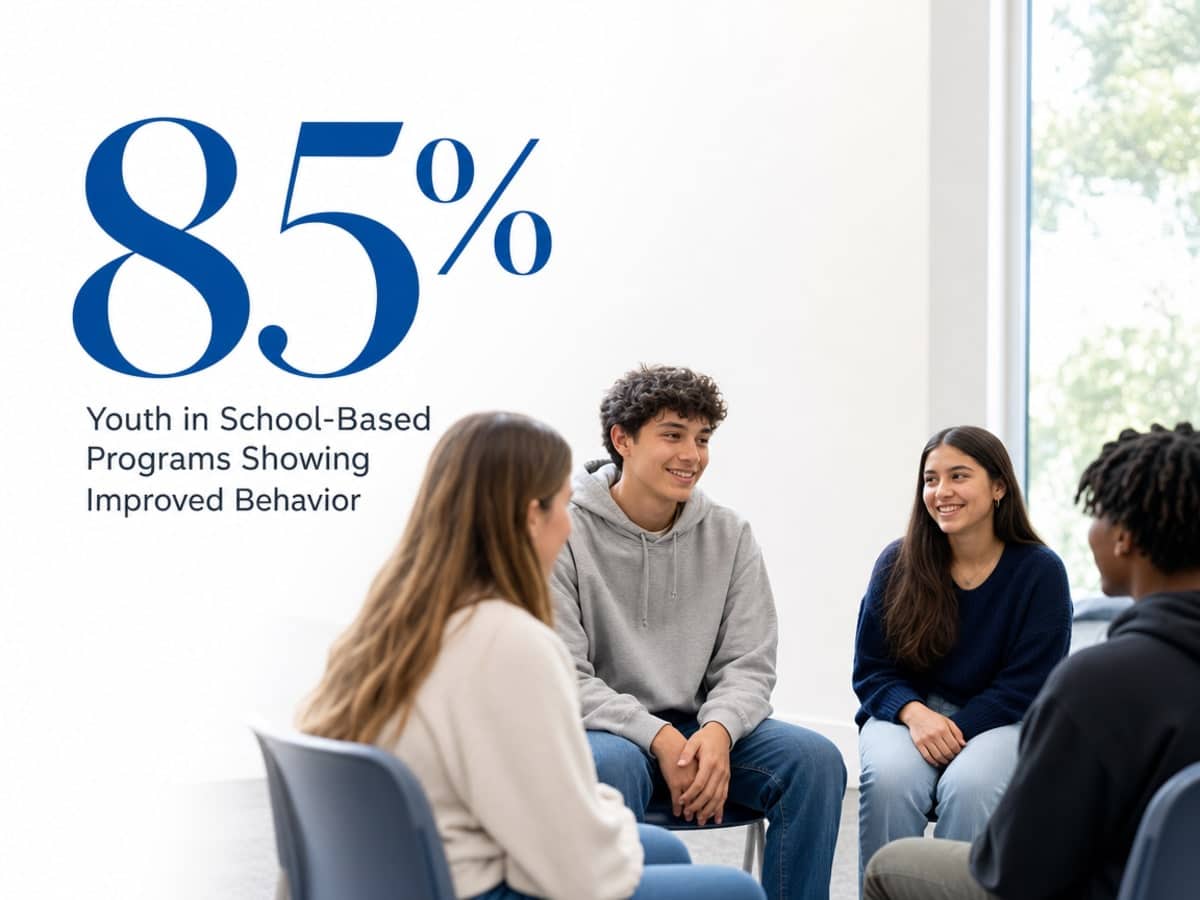
Here is why this call matters more than it feels like it should. In FY 2024, 85% of youth in Texas school-based programs funded by Community Mental Health Grants showed improved behavior while enrolled. That figure covers school-connected supports, not clinical treatment, but the takeaway for your family is the same: when the school knows a kid is working on something, the school can help hold the line. When the school does not know, your teen carries the whole plan alone.14
Try this script. Adjust the words, keep the shape.
| Section | Details |
|---|---|
| Opening | “Hi, I’m [name], [teen]’s parent. I’d like a 20-minute meeting before school starts. My teen finished a substance use program this summer and we’re building a return-to-school plan. I’m not asking for a special accommodation. I’m asking who I can call if something changes.” |
| What to share | The discharge date, the primary substance, the name and phone number of the aftercare contact, and the two or three settings you’re most worried about (a specific class, lunch, the bus). You do not have to disclose a diagnosis. You are sharing what the school needs to keep your kid safe. |
| What to ask | Who is my single point of contact this semester? What is the process if my teen asks to leave class to call their counselor? Are there peers I can request my teen be seated away from? How will absences for aftercare appointments be coded? |
| What to write down | The counselor’s direct line, their backup, and the date of your next check-in. Put it in your phone before you leave the parking lot. If your teen has ever searched adolescent mental health treatment Houston at 2 a.m., they already know the internet is not a plan. A named adult in the building is. |
Cenikor Houston’s role as the bridge between treatment and the school year
A quick note before this section: if the piece you’re reading elsewhere online mentions Odyssey House as the bridge program, that’s a different organization. This section is about Cenikor Houston, a nonprofit that has been running teen substance abuse treatment in Houston and across Texas for nearly six decades, and how their model is built to hand your teen off to the school year without dropping the plan.
Cenikor’s Houston program treats the return to school as part of treatment, not a separate customer service issue. The reason matters. SAMHSA’s advisory on adolescent substance use, drawn from Treatment Improvement Protocols 31 and 32, is explicit that continuity of care and recovery supports — not the intensity of the initial episode — are what protect the gains a teen makes in a program. In practice, that means the last two weeks of a summer stay at Cenikor should look different from the first two: less about detox and stabilization, more about the specific Tuesday your teen is about to live through.25
Here is what that bridge actually looks like for a Houston family:
- A named aftercare contact your teen meets before discharge, not after.
- A written continuing-care schedule — weekly counselor sessions, group check-ins, and a plan for what happens if a session gets missed — that you can hand to a school counselor.
- Recovery housing available if home isn’t stable enough yet for a return to routine.
- Family sessions that continue past the discharge date so the plan doesn’t collapse the first time your teen slams a bedroom door.
When you call, ask three specific things:
- Who is my teen’s aftercare contact and when do they meet?
- What does the first month after discharge look like on a calendar?
- If my teen slips in September, what happens the same week — not the next intake cycle?
A Cenikor-style continuum, from detox through outpatient and recovery aftercare, is designed so the answer to that last question is a phone call, not a new admission. That’s the difference between a program that ends at discharge and a bridge that carries your teen into first period.
Realistic recovery: what the first 12 months usually look like
Here’s the honest version, without the pep talk. In a review of 22 adolescent substance abuse treatment outcome studies, average sustained abstinence was about 38% at six months and 32% at 12 months, with individual study rates ranging from 30–55% at six months and 14–47% at one year. That’s the research base, not a Cenikor number. Read it twice, because it changes what a good year actually looks like.6
A 32% one-year sustained-abstinence figure does not mean your teen has a 68% chance of failing. Most kids in those studies significantly reduced their use, cut back on illegal behaviors, and improved at school and at home — even when a slip happened somewhere in the twelve months. Recovery for a 15-year-old rarely runs in a straight line. It runs in a jagged one that trends up.6
So what does a realistic year look like for a Houston family? Month one is exhausting; the newness of the routine is doing a lot of work. Months two and three are where the first real test lands — a party invitation, a breakup, a bad grade. Months four through six often bring a quieter stretch where you catch yourself thinking things are fine, which is the moment to keep the aftercare appointments, not cancel them. Months seven through twelve are where the identity work happens: your teen starts to describe themselves as someone who doesn’t use, not just someone who quit.
Celebrate the specific wins. A Tuesday where your kid made it to third period. A Friday night they came home on time. A conversation about a hard day instead of a slammed door. Those are the data points that add up to the 32%, and to the much larger group whose lives got measurably better even without perfect abstinence.
Paying for care: Medicaid, CHIP, and the YES waiver in Harris County
Cost is often the reason a parent closes the browser tab at midnight. Here is the shorter version of a complicated answer. If your teen is on Texas Medicaid or CHIP, adolescent substance use treatment is a covered benefit — outpatient chemical dependency counseling, individual and group treatment, detoxification, and residential care are all in the approved list of Medicaid substance use services for youth ages 13–17 who meet clinical and financial eligibility. That is not a footnote. That is a real door.19
The practical step is to call the number on the back of your teen’s Medicaid or CHIP card and ask for the behavioral health or substance use line specifically. In Texas, most Medicaid kids are enrolled in a STAR managed care plan, and covered services are delivered through that plan’s network in your area. Ask two questions on that first call: which adolescent substance use providers in Harris County are in network, and what the authorization process looks like for outpatient versus residential care.20
The YES (Youth Empowerment Services) waiver is a separate Medicaid pathway for children and adolescents with serious needs who require intensive community-based services to stay at home and in school. It is worth asking your Local Mental Health Authority about eligibility if standard Medicaid isn’t stretching far enough.19
A note on state-funded backup: HHSC is the payor of last resort, meaning Medicaid benefits are used first, and state funds fill gaps for children who qualify but aren’t fully covered. You are not on your own with the bill.12
A first-week-back plan for the parent reading this at 11 p.m.
If it’s late and you’re still on your phone, here’s what to do before you close the tab. Not a philosophy. A list your teen can live through next Tuesday.
- Anchor the morning. Pick one wake time and one breakfast that doesn’t require decisions. Put the phone charger in the kitchen, not the bedroom. A tired teen at 6:45 a.m. is a teen who leans on old habits by third period.
- Pack a first-week bag that isn’t about school supplies. In it: a written list of two safe people at school, the direct number for the aftercare contact at your teen’s teen substance abuse treatment Houston program, a coping-skill card your teen wrote themselves in family sessions (not one you found online), and a lunch that doesn’t send them into the cafeteria alone on day one.
- Email the school counselor tonight. Two sentences: your teen is returning from summer treatment, you’d like a 20-minute meeting this week. That’s it. You’ve already written the longer script earlier in this guide.
- Put three appointments on the family calendar before Sunday: the first week’s aftercare session, a family check-in at home (Thursday, 15 minutes, low stakes), and one thing your teen actually wants to do that isn’t with the old friend group.
- Text one adult in your own life who knows what’s happening. Not to fix anything. So you’re not the only one holding this at 11 p.m. tomorrow night, too.
Frequently Asked Questions
How do I know if my teen needs formal substance abuse treatment or just a talk with their pediatrician?
Start with the pediatrician if you’re not sure. Ask them to use a validated adolescent screening tool — SAMHSA’s guidance recommends structured screening rather than a general conversation. If your teen is using weekly, has been caught at school, has driven under the influence, or the use is affecting sleep, grades, or friendships, you’re past the pediatrician-only stage. That’s the point to call a program that treats teens specifically.25
Will Cenikor Houston coordinate with my teen’s school counselor before classes start?
Yes — ask for this specifically when you call. A named aftercare contact should be willing to speak with your teen’s school counselor, share a continuing-care schedule, and be reachable if something changes mid-semester. You do not have to disclose a diagnosis for this to work. School-connected supports for Texas youth show measurable behavior improvement when the school knows a kid is working on something. Get that adult in the loop before the first bell.14
Does Medicaid, CHIP, or the YES waiver cover teen substance abuse treatment in Houston?
Yes. Approved Medicaid substance use services for youth 13–17 include outpatient chemical dependency counseling, individual and group treatment, detox, and residential care when clinical and financial eligibility are met. Call the behavioral health line on the back of your teen’s card to find in-network Harris County providers through your STAR plan. The YES waiver is a separate Medicaid pathway for kids needing more intensive community-based support. Ask your Local Mental Health Authority about eligibility.19,20
What happens if my teen relapses in the first 90 days after discharge?
First: it’s common, not a failure. More than half of adolescents relapse within 90 days of an acute treatment episode, per continuing-care research. Call the aftercare contact the same day — not the next intake cycle. A good program treats a slip as a reason to increase contact, not to start over. Assertive continuing care with proactive outreach improves days abstinent compared to usual monthly check-ins. The plan should already name who to call.7,8
Can my teen finish treatment before the school year starts in August?
Sometimes, but that’s the wrong question. The right question is whether the aftercare piece is scheduled before school starts, not whether the residential piece is finished. About 90% of adolescents in treatment nationally are in outpatient settings, and outpatient often continues into the school year on purpose. Aim to have the discharge date, the first aftercare appointment, and a school counselor meeting all on the calendar before the first day.7
What should I do tonight if I just found out my teen is using?
Do less than you think. Don’t confront at midnight. Write down what you saw, when, and what your teen said. Tomorrow, call your pediatrician for a screening appointment and call one Houston program that treats teens to ask about assessment. Texas HHSC operates 24/7 helplines for families in this exact moment. Sleep if you can. You are not deciding your teen’s whole future tonight — you are deciding the next 48 hours.11
References
- TEXAS – National Survey on Drug Use and Health (State Tables, 2022–2023). https://www.samhsa.gov/data/sites/default/files/reports/rpt56188/2023-nsduh-sae-state-tables_0/2023-nsduh-sae-state-tabs-texas.pdf
- Treatment Episode Data Set (TEDS) 2023: Admissions to and Discharges from Publicly Funded Substance Use Treatment. https://www.samhsa.gov/data/report/2023-teds-annual-report
- Access to and Outcomes of Substance Use Disorder Treatment Services for Adolescents and Young Adults. https://www.samhsa.gov/data/report/access-and-outcomes-sud-treatment-services-adolescents-young-adults
- Texas School Survey of Drugs & Alcohol Use (Dashboard). https://healthdata.dshs.texas.gov/dashboard/drugs-and-alcohol/surveys/texas-school-survey-of-drugs-and-alcohol
- Behavioral Health Barometer: Texas, Volume 6. https://www.samhsa.gov/data/sites/default/files/reports/rpt32860/Texas-BH-Barometer_Volume6.pdf
- A Comprehensive and Comparative Review of Adolescent Substance Abuse Treatment Outcome. https://www.ncbi.nlm.nih.gov/books/NBK68420/
- Adolescent Outpatient Treatment and Continuing Care. https://pmc.ncbi.nlm.nih.gov/articles/PMC2885472/
- Continuing Care for Adolescents in Treatment for Substance Use Disorders. https://pmc.ncbi.nlm.nih.gov/articles/PMC5018300/
- Outcomes of a Comprehensive Treatment Program for Adolescents with a Substance-use Disorder. https://pubmed.ncbi.nlm.nih.gov/11516589/
- Drug Treatment Outcomes for Adolescents with Comorbid Mental and Substance Use Disorders. https://pubmed.ncbi.nlm.nih.gov/11434639/
- Youth Substance Use | Texas Health and Human Services. https://www.hhs.texas.gov/services/mental-health-substance-use/youth-substance-use
- Report on the Children’s Behavioral Health Strategic Plan – 2024. https://www.hhs.texas.gov/sites/default/files/documents/childrens-behavioral-health-strategic-plan-2024.pdf
- Behavioral Health Services Data Book: A Reference to Community Mental Health and Substance Use Services, Fiscal Year 2023. https://www.hhs.texas.gov/sites/default/files/documents/bhs-data-book.pdf
- Statewide Behavioral Health Strategic Plan Progress Report for Fiscal Year 2024. https://www.hhs.texas.gov/sites/default/files/documents/sbhcc-progress-report-fy-2024.pdf
- Treatment Services – Texas Juvenile Justice Department. https://www.tjjd.texas.gov/state-programs/treatment-services/
- Chapter 353 Substance Use Disorder Treatment Programs (TJJD Policy). https://www.tjjd.texas.gov/wp-content/uploads/2024/03/Chapter_3530.pdf
- Family Connections Newsletter – Alcohol or Other Drug Treatment Programs (TJJD). https://www2.tjjd.texas.gov/programs/FamilyConnectionsNewsletter/18_ap_FCNews.pdf
- Services – Youth Diversion & Development (Harris County Juvenile Probation Department). https://hcjpd.harriscountytx.gov/Services/Youth-Diversion-Development
- Public Behavioral Health Services in Texas. https://hogg.utexas.edu/wp-content/uploads/2018/11/Public-Behavioral-Health-Services-in-Texas.pdf
- Help for Mental Health, Drugs, Alcohol: Texas Medicaid, CHIP. https://www.samhsa.gov/find-support/health-care-or-support/professional-or-program/medicaid-or-chip/texas
- Treatment Effectiveness Report, 2024. https://www.tjjd.texas.gov/wp-content/uploads/2025/03/Treatment-Effectiveness-Report-2024.pdf
- Regional Needs Assessment 2016: Youth Substance Abuse Trends and Prevention Needs in the Texas Gulf Coast. https://www.houstontx.gov/hhcodp/gulf-coast-rna.pdf
- Substance Use and Mental Disorders in the Houston–Sugar Land–Baytown Metropolitan Statistical Area. https://www.samhsa.gov/data/sites/default/files/NSDUHMetroBriefReports/NSDUHMetroBriefReports/NSDUH-Metro-Houston.pdf
- Youth Substance Abuse & Prevention. https://www.houstontx.gov/health/Youth/Substance%20Abuse%20and%20Prevention%20FINAL.pdf
- Advisory: Screening and Treatment of Substance Use Disorders Among Adolescents. https://library.samhsa.gov/product/advisory-screening-and-treatment-substance-use-disorders-among-adolescents-based-tip-31-32
Recovery Built for Real Life
Recovery doesn't have to feel out of reach. At Cenikor, we provide practical, affordable care designed for real life—whether you're navigating substance use, supporting a loved one, or helping someone find the right level of care.
Explore Your Options Written by Cenikor’s Clinical & Compliance Team